
When should you replace a kitchen mixer tap?
A kitchen tap works far harder than a bathroom one. It's turned on and off dozens of times a day, often with wet or greasy hands, which is exactly why it's usually the first thing in the flat to reach the end of its life.
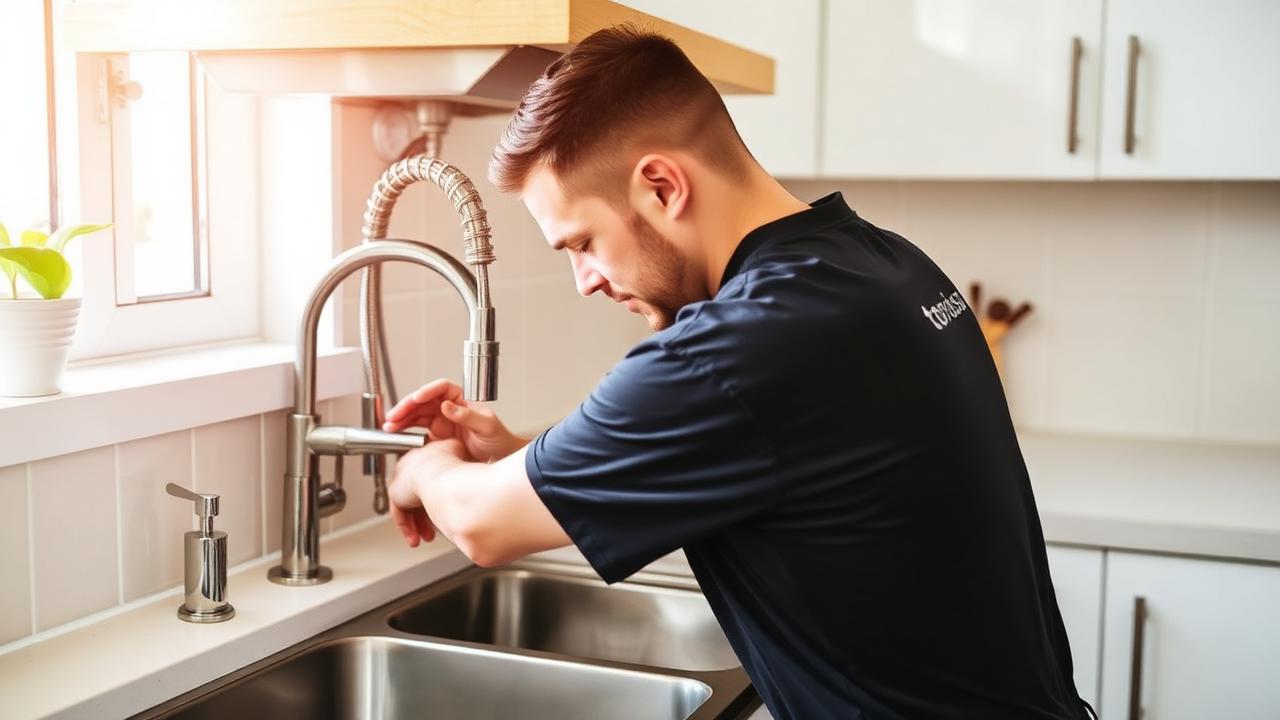
The right time to replace it isn't when the tap finally stops working, but when repair costs start to exceed the price of a new tap, or when the connection underneath can no longer be trusted.
Below are concrete signs to look for, plus what to measure before choosing a new tap.
Clear signs the tap has reached the end of its life
One sign alone doesn't necessarily mean replacement. Two or more together almost always means repair isn't worth it.
- The lever moves stiffly, creaks or sticks
- The spout swivels too freely and water seeps from underneath it
- The water no longer mixes evenly — the temperature jumps with the slightest movement of the lever
- The pull-out spray hose won't retract or leaks inside the cabinet
- The chrome finish is peeling and green corrosion shows underneath
- Pressure stays weak even after cleaning the aerator
The cabinet floor tells the truth
Feel the bottom of the sink cabinet with your hand. If the board is soft, dark or swollen, a leak has been running for a while. At that point the question isn't just about the tap anymore, but whether the cabinet floor also needs replacing.
Connection hoses are a separate issue
The most common kitchen mishap doesn't start with the tap itself, but with its connection hose. The rubber core of a braided hose ages and the braiding rusts even when the tap itself works perfectly.
Hoses are a wear part. It makes sense to replace them with every tap change and never leave an old hose attached to a new tap.
White limescale marks or rust-coloured spots on the hose braiding in the cabinet are an early warning of failure.
What to measure before buying a new tap
Most failed DIY purchases come down to two simple things not being measured.
- The diameter of the sink or worktop hole (usually 32–35 mm)
- The worktop thickness — a thick stone surface needs a longer fixing bolt
- The clearance under a window, if the tap sits in front of one
- The spout reach, so water reaches both bowls of a double sink
- Whether angle valves exist in the cabinet and what condition they're in
The particulars of a stone worktop
A stone or composite worktop can't simply be drilled to a larger hole without the right tool. If the new tap needs a different opening, that has to be planned as a separate job.
Repair or replace
If the problem is limited to the cartridge or the aerator and the tap is good quality, repair is clearly cheaper. If the body moves, the chrome is peeling or the hoses are old, replacement is the only sensible route.
A tip: in the kitchen it's worth choosing a model with a replaceable cartridge whose spare parts are available in Estonia. That choice determines whether the next fault is a ten-minute job or a full replacement.
To have the work done, our team handles general plumbing work including tap installation and connections.
How long does replacement take
A typical kitchen tap swap with working angle valves takes about an hour. If there are no angle valves, or they won't close, the flat's main stopcock has to be shut off and the job takes longer.
In a cramped cabinet under a deep sink, where the nut can only be reached with a special wrench, the time can stretch out. It's worth clearing the cabinet before the technician arrives.
Frequently asked questions
Related services
Need a professional?
Toru SOS responds fast across Tallinn, Harju county and all of Estonia.
- Plumbing work
- Drain unblocking
- CCTV pipe inspection
- High-pressure jetting
- 24/7 emergency service