
Why is a heated towel rail dripping or seeping?
A water patch under a heated towel rail is more dangerous than it looks. The bathroom floor is damp anyway, which is why a persistent leak is often only noticed once the damage has already reached the grout lines or a neighbour's ceiling.
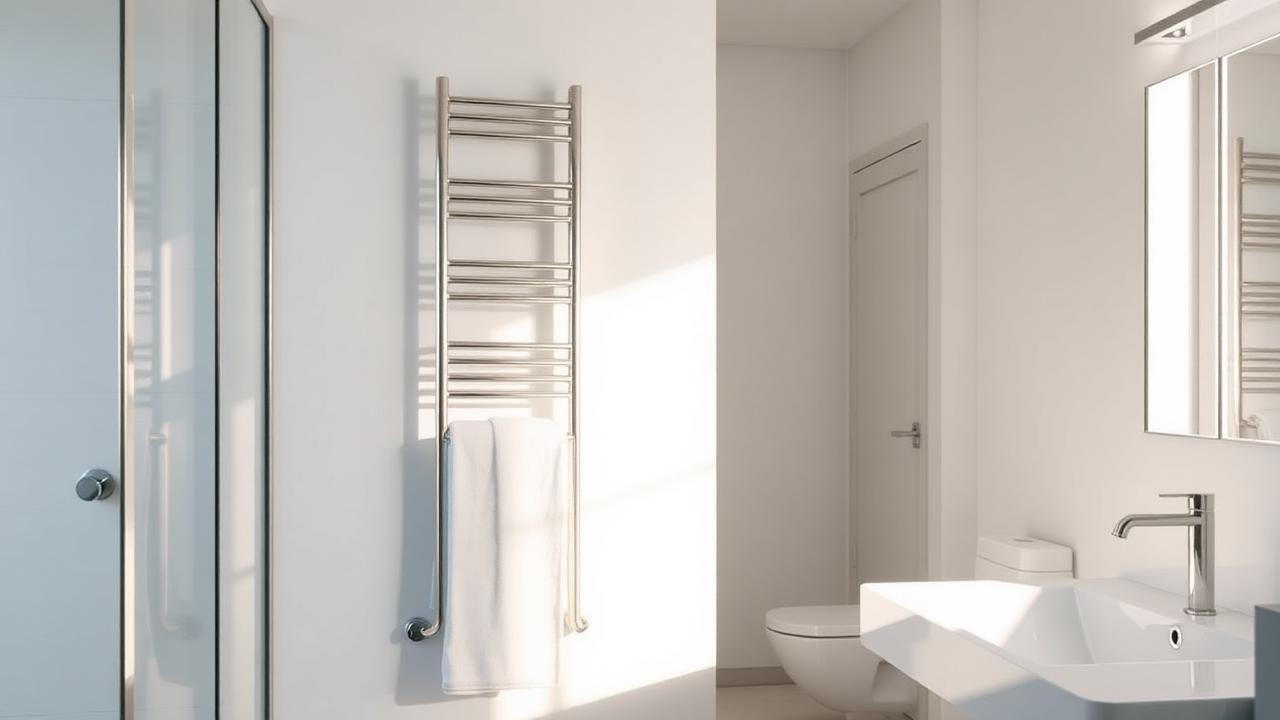
A towel rail is connected either to the domestic hot water loop, to the heating system, or it runs on electricity. The cause of a leak and its solution depend entirely on which type you have.
Below we look at how to identify the type, where the leak typically starts, and what you're allowed to check yourself.
Three types of towel rail – three different leaks
Identify the type first. Acting on the wrong assumption can quickly turn into a bigger problem in an apartment block.
- Water-loop (circulating hot domestic water) — warm all year round, the leak usually comes from a threaded connection
- Connected to the heating system — warm only during the heating season, the water is dark and leaves a black mark
- Electric — no water connection at all; if water appears underneath it, the leak is coming from elsewhere, for example pipework in the wall
The colour of the water gives a clue
Clear water points to the domestic water loop. Black or brownish water means the heating system, where water containing magnetite circulates. The same principle applies if a radiator connection is leaking elsewhere in your heating system.
Where the leak most often starts
The towel rail pipework itself is rarely at fault. It's almost always the connection or a fitting.
- The threaded connection at the wall — the old sealant has dried out
- The bleed valve — left open or its seal is worn
- A shut-off valve or push-fit connector with scaled-up internals
- A welded seam on the body — on an old chrome pipe this points to needing a replacement
- The mounting point, where the rail has repeatedly shifted under heavy wet laundry
What you can check yourself
Dry every connection completely and wrap them in paper tissue. Check after an hour and again after a day — a wet strip will pinpoint the leak exactly.
Check whether the bleed valve is fully closed. This is the most common and also the easiest cause to fix.
Don't force a threaded connection. The thread on an old chrome pipe is thin and breaks easily — a small drip then turns instantly into an emergency.
When to shut off the water immediately
If the water isn't just dripping but seeping continuously or spraying, close the rail's shut-off valves. If there are none, the riser in the building has to be shut off, and that always goes through the management company or a technician — our team also provides emergency callouts through general plumbing services.
How the leak is properly repaired
A proper repair means draining the section, taking the connection apart, fully removing the old sealing material and redoing it. Just tightening a dry thread further is not a repair.
If there are no shut-off valves, they're fitted during the repair. It's a small extra job that saves shutting off the whole riser next time.
If the body of the rail itself is leaking, there's no point repairing it — it gets replaced. Ask our team about new towel rail installation as part of general plumbing work.
How to prevent it happening again
Don't hang heavy, wet loads of laundry on the rail that pull it downward — movement loosens the threaded connection.
Check the connections by hand once a year. A dry hand on a dry connection takes ten seconds and gives an early warning.
If bathroom renovation work is planned, it's worth renewing the rail's connections and shut-off valves at the same time.
Frequently asked questions
Related services
Need a professional?
Toru SOS responds fast across Tallinn, Harju county and all of Estonia.
- Plumbing work
- Drain unblocking
- CCTV pipe inspection
- High-pressure jetting
- 24/7 emergency service