
Radiator thermostatic head is stuck – what should you do?
A classic autumn scenario: you turn the thermostat to maximum, but the radiator stays cold. Or the opposite — the room is too warm and turning the head does nothing. Usually the fault isn't in the building or the boiler, but in one small metal pin.
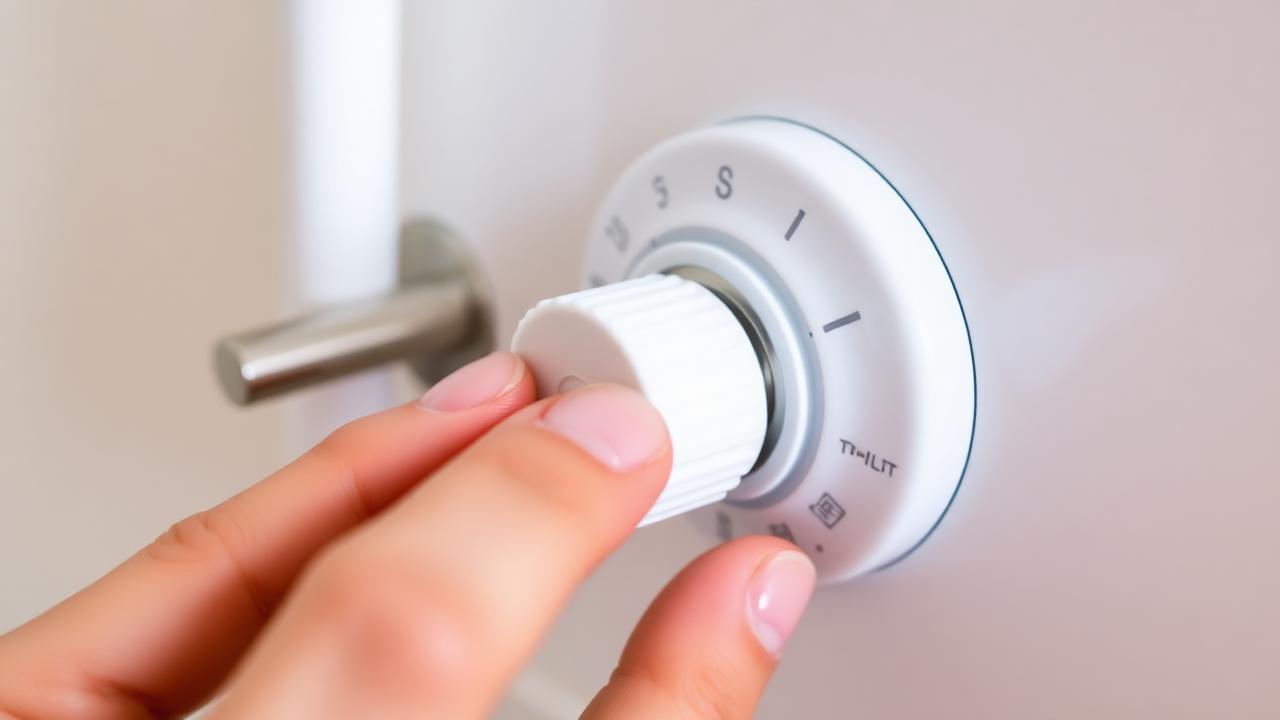
Underneath the thermostatic head, inside the valve body, sits a spring-loaded pin. If the radiator stays in one position all summer, that pin sticks in place and turning the head no longer moves anything.
This is one of the few heating system faults you can often fix yourself in five minutes — if you do it correctly.
How to tell if the pin is stuck
The diagnosis is simple and requires no tools beyond a single wrench.
- Turn the head to maximum and wait 20 minutes — if nothing changes, continue checking
- Unscrew the head completely (the nut is usually hand-turnable or needs a flat wrench)
- Look at the metal pin in the centre of the valve — it should spring back slightly
- Press the pin gently with your finger: if it doesn't move at all, it's stuck
If the pin moves but the radiator is still cold
Then the problem isn't the thermostat. Check whether there's air in the system or whether the heat distribution is uneven — this is often the real cause when other radiators heat up fine but one stays cold.
How to free the pin
A stuck pin can usually be freed without draining any water, since the valve body stays closed.
Gently press the pin in with pliers or your finger and release. Repeat this 10–15 times until the movement becomes smooth and the pin springs back on its own under spring force.
Don't hit the pin with a hammer or pull it out with pliers. A pin that's been pulled out means an immediate jet of water.
If the pin still won't move
Then the inside of the valve is scaled or corroded and the valve needs replacing. This requires draining the section and, in an apartment block, shutting off the riser.
Why the head gets stuck in the first place
The main cause is inactivity. If the head stays in one position all summer, the pin never moves and corrosion does its work.
A second cause is debris circulating in the system that settles inside the valve. This is more common in old systems that have never been flushed.
A third cause is a cheap or unsuitable thermostatic head whose internal expansion element has already worn out.
- Turn the thermostats to maximum and back once a month during summer — this keeps the pin moving
- Don't leave the thermostat fully closed for the whole summer
- Don't cover the thermostatic head with a curtain or furniture — it will then read the wrong temperature
When to replace the head and when the valve
If the pin moves freely but the head doesn't open or close the valve, replace only the thermostatic head. This is a cheap, quick job that can be done without shutting off the water.
If the pin is still stuck after trying to free it, or if water seeps from under the valve body, the whole valve needs replacing. This kind of work is usually done outside the heating season.
If the radiator itself is old and corroded, it's sensible to arrange a full radiator replacement at the same time as part of the same visit.
Worth checking before the heating season
Go round all the thermostatic heads in September: turn to maximum, wait, turn back. This is how you find stuck pins while there's still time to fix them calmly.
During the same check it's worth reviewing the pressure and the bleed valves — three things that account for most winter heating problems.
Frequently asked questions
Related services
Need a professional?
Toru SOS responds fast across Tallinn, Harju county and all of Estonia.
- Plumbing work
- Drain unblocking
- CCTV pipe inspection
- High-pressure jetting
- 24/7 emergency service