
Why does a radiator make a knocking or banging noise?
Most radiator noise isn't a fault — it's physics. But some sounds are a clear warning that there's air, debris or the wrong pressure in the system, and it's worth telling them apart before winter properly sets in.
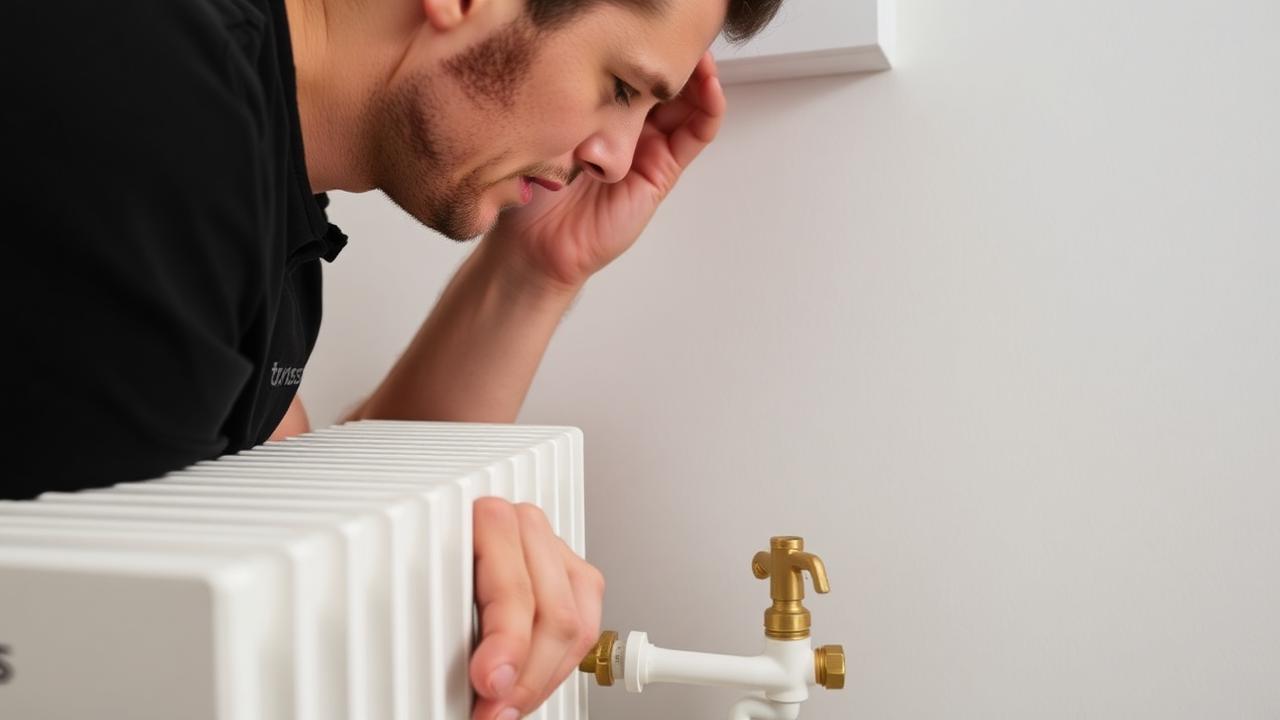
The character of the noise tells you more than its volume. Clicking, knocking, banging and gurgling all come from completely different causes.
Below we go through the main types of sound and what to check for each one.
Clicking and cracking — thermal expansion
The most common sound. When the heating water heats up, the metal expands and moves against a bracket or a floor duct. The sound is cyclical, follows the heating turning on and off, and disappears once the temperature is steady.
This isn't a fault, but it can be reduced if there's expansion room in the pipe ducts and the brackets aren't clamped too tightly.
How to check
Touch the radiator brackets and pipe ducts when the sound occurs. If you can feel the vibration by hand exactly at that spot, it's expansion, not water.
Gurgling and bubbling — air in the system
A gurgling, flowing-stream-like sound almost always means air. It's usually accompanied by the top of the radiator staying cold.
This is normal for a short while after the system has been refilled, but if air keeps coming back, there's a leak somewhere or the automatic air vent isn't working properly.
A sharp knock or bang — water hammer
A single loud metallic bang in the pipework occurs when a moving column of water is stopped abruptly. In apartment blocks this often happens with valves closing sharply or when a pump is running.
Water hammer isn't just cosmetic — the impacts strain the connections and are one reason an old threaded joint eventually starts to leak.
- The bang always happens during the same action — check the valves and pump settings
- The bang is random — more often related to system pressure or air
- The bang has grown stronger over time — needs a technician's assessment
Rattling and scraping — debris or scale
If the sound is more like sand or gravel moving, there's debris circulating in the system: magnetite, rust and sediment from old pipes.
In this case uneven heating usually accompanies the noise — some radiators are hot, others lukewarm. This is a typical sign the system needs flushing, which our team can arrange as part of general plumbing work.
When to call a technician
Call a technician if the noise is accompanied by a drop in pressure, visible moisture, uneven heating, or if the bangs are strong enough to make the pipework visibly move.
If the noise is just clicking and all the radiators heat evenly, there's no need for urgent action — a pre-heating-season check is enough.
Frequently asked questions
Related services
Need a professional?
Toru SOS responds fast across Tallinn, Harju county and all of Estonia.
- Plumbing work
- Drain unblocking
- CCTV pipe inspection
- High-pressure jetting
- 24/7 emergency service