
Heating system pressure too high – what to check
Low pressure gets talked about a lot, but pressure that's too high is actually more dangerous. It puts strain on every joint, forces the safety valve to release water, and often ends in a leak at the weakest point.
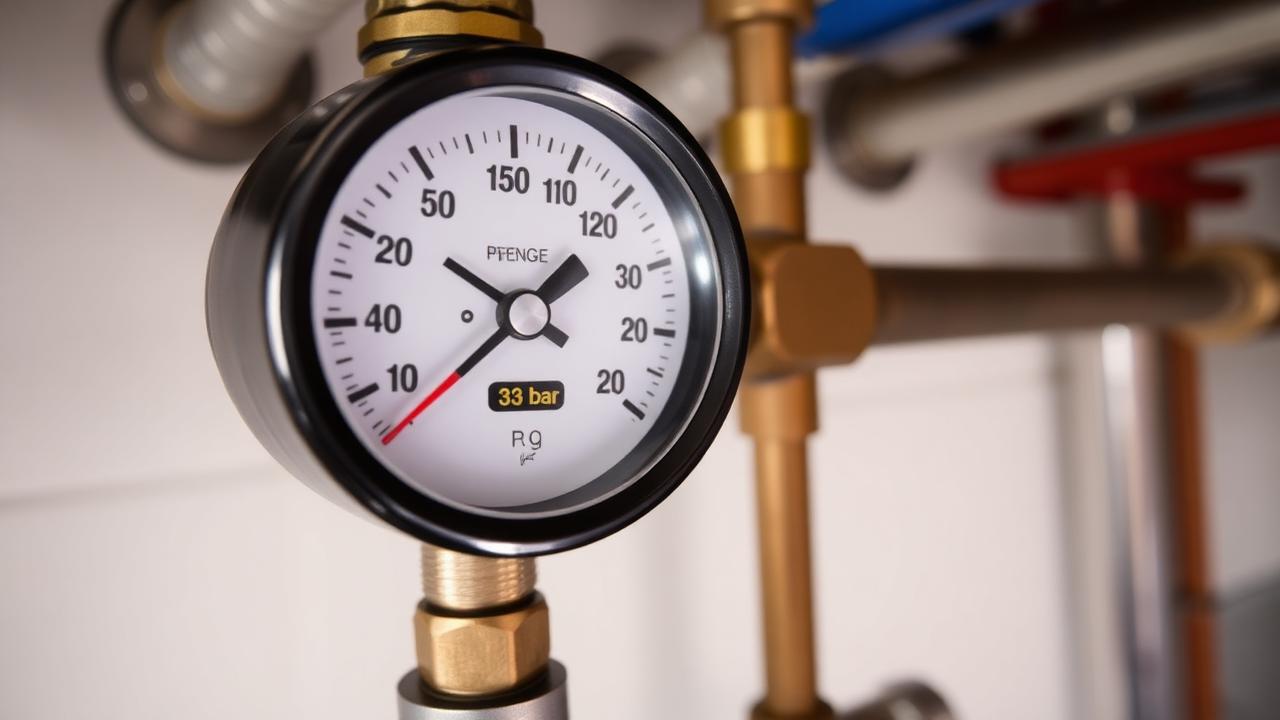
In most house systems, normal pressure when cold is 1.0–1.5 bar, rising to around 2.0–2.5 bar when hot. If the gauge climbs towards 3 bar, something is wrong.
Below is the order of checks that answers the question in most cases without dismantling anything.
First: does pressure rise while heating or while idle
This one observation splits the causes into two groups and saves a lot of guesswork.
- Pressure rises only while the system is heating up and drops back down as it cools — check the expansion vessel
- Pressure rises even in a cold system, slowly over several days — water is entering the system from somewhere
- Pressure jumps suddenly right after filling — the filling valve has been left open or is leaking
Write the readings down
Note the gauge reading cold in the morning and hot in the evening over three days. These six numbers let a technician diagnose the fault many times faster.
The most common causes
In practice, four situations keep repeating.
- The expansion vessel has lost its pre-charge or the membrane is torn — the system no longer has room to expand
- The filling valve is leaking and constantly adds water from the mains
- The heat exchanger has failed and domestic water pressure is leaking into the heating circuit
- The gauge itself is faulty and reads incorrectly
Why the filling valve is suspect number one
Mains water pressure is usually 3–6 bar, well above the heating circuit. It only takes the filling valve staying slightly open, or its seal wearing out, for the system to slowly overfill.
Check that the filling hose is disconnected after filling rather than just shut off at the tap.
The safety valve is a symptom, not the cause
If the safety valve is dripping, it's a sign the system has reached its limit — usually 3 bar. The valve is simply doing its job.
Replacing the valve without addressing the cause won't help. If the underlying pressure issue isn't solved, the new valve will start doing the same thing within weeks.
If a valve has been dripping for a long time, its sealing surface is usually damaged and it will likely need replacing anyway.
What you can safely do yourself
Check that the filling valve is firmly closed and the filling hose has been removed.
If pressure is above normal, you can carefully bleed it down through a radiator air vent into a container while watching the gauge. Do it a little at a time — releasing too much creates the opposite problem immediately.
Never open the safety valve manually more than necessary, and never block it.
When to call a technician straight away
If pressure climbs back up within a few hours of being released, or if the safety valve keeps releasing water continuously, this is a fault rather than a settings issue. See heating system maintenance and flushing or book emergency plumbing help.
Why high pressure should never be ignored
Every extra bar above normal puts strain on every threaded joint, radiator valve and underfloor heating manifold connection. Most so-called sudden leaks actually start this way.
The system also loses a litre of water every time the safety valve releases, which gets replaced by fresh, oxygen-rich water — this speeds up corrosion and sludge build-up.
Frequently asked questions
Related services
Need a professional?
Toru SOS responds fast across Tallinn, Harju county and all of Estonia.
- Plumbing work
- Drain unblocking
- CCTV pipe inspection
- High-pressure jetting
- 24/7 emergency service